
Two Moons

"Two things fill me with constantly increasing admiration and awe, the longer and more carefully I reflect on them: the starry heavens above me and the moral law within me." — Immanuel Kant

My pal from the track team, Bill, had a new four-wheel drive vehicle called a Bronco. His family owned a carpeting and furniture business in the booming factory towns of mid-Michigan, which meant they had the means to buy him the latest in automotive technology while he was a sophomore in high school. Bill’s 1967 Bronco was from the second year of production by Ford Motor Company, and he was constantly asking his friends to go “four-wheeling.” There were endless tracks through the north woods but when the riots began in Detroit, he thought it would be interesting to drive into the city to see what was happening, and, foolishly, three of us agreed.
We got close enough to see the smoke, some flames, random gunfire, endless sirens and a few police cars fly by toward the inner city. There was a quick consensus from ignorant young teens that we were ignorant young teens and we turned around and headed back to the safety of the suburbs where we lived, which were, during that era, all white. The Voting Rights and Civil Rights Acts had been passed by Congress but little had changed for Blacks in America. They were dying in disproportionate numbers in Vietnam and endured unemployment of double digits in a thriving economy. Economic and cultural bombs that had been ticking for decades blew up and set the Motor City to flame.
The U.S. was hardly four years removed from the murder of its president on the streets of Dallas. Texan LBJ, not yet suspected of being complicit in a conspiracy killing of JFK, had taken up some of his predecessor’s causes, and a big one JFK had decided to abandon, which was the War in Vietnam. Boys a few years ahead of me in high school were being drafted after their birthdates had been pulled from a tumbler by a man in a suit on TV. The saddest lottery ever devised was sending its winners off to die in a war without purpose. When Detroit blew up with social unrest, those of us coming of age thought everything about our country was coming undone.
And then came 1968.
The fires got hotter. All America was burning, politically, economically, with literal flames, and not just Detroit. In the span of sixty-three days that spring, we lost both Martin Luther King Jr. and Robert Francis Kennedy, two men who, whatever their flaws, carried inside them a vision of the country as something generous and redeemable. King fell on a motel balcony in Memphis on April 4th, cut down at 6:01 in the evening while the sanitation workers he had come to stand with were still on strike below. Kennedy was killed in the kitchen of the Ambassador Hotel in Los Angeles just after midnight on June 5th, moments after winning the California primary, still damp from the crowd’s adoration, filled with the energy of hope from a people he had just left.
The country did not even know how to grieve so much loss, so it convulsed.
Cities burned after King’s murder, Washington, Chicago, Baltimore, Louisville. The Democratic National Convention in Chicago that August became a television spectacle of police batons and tear gas, of young people bloodied on camera while delegates argued inside. The Vietnam War was consuming fifty thousand American lives and the moral credibility of an entire generation of leadership. Lyndon Johnson, exhausted and broken, had already announced he would not seek reelection. The architecture of the American consensus, built so carefully since the New Deal, and cemented by the sacrifices of World War II, was cracking at every joint.
I still view that time as the most traumatic single year in modern American life. I had the sense that no matter how hard I studied and worked that when I was ready for college and a job, there would be little left of my country to offer me a future. If I could not get a student deferment, I would be drafted. Growing up in a disadvantaged family, LBJ’s Great Society had kept us in food, modest health care, and then college grants, scholarships, and loans. After investing in my future, I dreaded the idea of being sent into combat to die and waste the government’s investment in me. The irony was rich with stupidity. Getting a university education seemed almost meaningless and did not proffer hope.
And then, a month before I was to leave home to start college, on a Sunday evening in July, something happened.
Neil Armstrong stepped off a ladder onto the surface of the Moon. It was 10:56 PM Eastern time on July 20th, 1969, and six hundred million people, a number the world had never before assembled around a single event, watched it happen on flickering black and white screens and color consoles in probably every country on the planet. A man from Wapakoneta, Ohio, stood on another world and spoke back to ours.
Whatever you believe about government, about institutions, about the capacity of collective human endeavor, that moment was real. The footprint was more than just an impression in moon dust. The flag, however symbolically complicated, stood for hope against claims from Southeast Asia of oppression. For a country that had spent the preceding year watching its best aspirations shot down on balconies and in hotel kitchens, its cities touched to flame and violence, the Moon landing was something the national psyche desperately needed, which was a proof that we were still capable of the extraordinary.
It did not erase 1968. It did not bring back King or Kennedy or the fifty-eight thousand names that would eventually be carved into a black wall in Washington. I was thankful to LBJ for his Great Society but I could not forgive him for Vietnam. But that summer when my countrymen stepped onto the Moon, I felt there was evidence that our American project, however battered and betrayed by its own worst impulses, still had within it the capacity to do something that had never been done before in the history of the human species. We could be a hell of a lot greater than the chaos that was filling my young man’s field of vision.
The Moon did not heal America, though, but it reminded us that we were healable.
Our second Moon trip here in the spring of 2026 might not have the same symbolic power to motivate change. The wounds we presently suffer are different in texture but familiar in origin. If the late 60s was when the American construct was fractured, we may have arrived at a time of broken bones. The institutions that survived 1968 are being dismantled with a deliberateness that the chaos of that year never quite achieved. The difference between then and now is that in 1968, the system was being attacked from outside by those who wanted it to live up to its promises. In our current crisis, America is being hollowed out from within by those who find its sacred covenants to be inconvenient.
Donald Trump’s second administration has prosecuted a campaign against the architecture of American democracy with a thoroughness that would have seemed impossible to anyone watching the evening news in 1969. Federal agencies gutted. Inspectors general removed in the night. The Justice Department weaponized against political opponents with a brazenness that Nixon, for all his crimes, managed only partially and in secret. The press labeled an enemy of the people. Judges defied. Treaties abandoned. Allies lectured and adversaries flattered.
The language of the authoritarian playbook is not new. What is new, however, is how little resistance it has encountered from the institutions designed to resist it, and the voting public that feels hopeless and frozen in a frightening democratic stasis. In 1968, the trauma was acute, sudden, violent, and visible. Bullets and fire. In our present moment, the trauma is chronic, the low-grade fever of a democracy running hotter than it should, its defenses compromised, citizens exhausted by the daily effort of maintaining outrage in the face of an administration that has made the outrageous routine.
And yet.
There are things worth looking at if you can bear to lift your eyes from the wreckage. In 2025, a record number of Americans ran for local office for the first time. School board seats that had been uncontested for decades drew three and four candidates. Town halls that once struggled to fill a room turned people away at the door. The machinery of participatory democracy, rusty, imperfect, exasperatingly slow, is being oiled by people who had previously left it to others.
The courts, for all their political coloring, have not entirely collapsed. Judges appointed by both parties have issued rulings that surprised those who expected pure deference. The constitutional architecture, strained as it is, has not yet given way entirely. This is not nothing. In fact, in the current climate, I consider it quite a lot.
The press, diminished, disrupted, financially precarious, is doing some of the most consequential accountability journalism in its history. Reporters are documenting in real time what previous generations had to reconstruct from archives. The record is being kept. I am certain that matters more than we may know right now.
And there is this, which may seem small but is not. Americans are talking to each other again. Not always kindly, not always productively, or with civil tongues, but neighbors do discuss differences of opinion across fences and in grocery stores and at the edges of Little League fields. I view them as the halting, uncomfortable conversations of people who are trying to find each other in the dark.
What the Moon landing gave America in 1969 was not optimism, exactly; to me, optimism is cheap and requires no evidence. What we got from that gray and black film and sending our local boys to the stars, was wonder, which is the older, more durable emotion that does not deny difficulty but insists that difficulty is not the whole story.
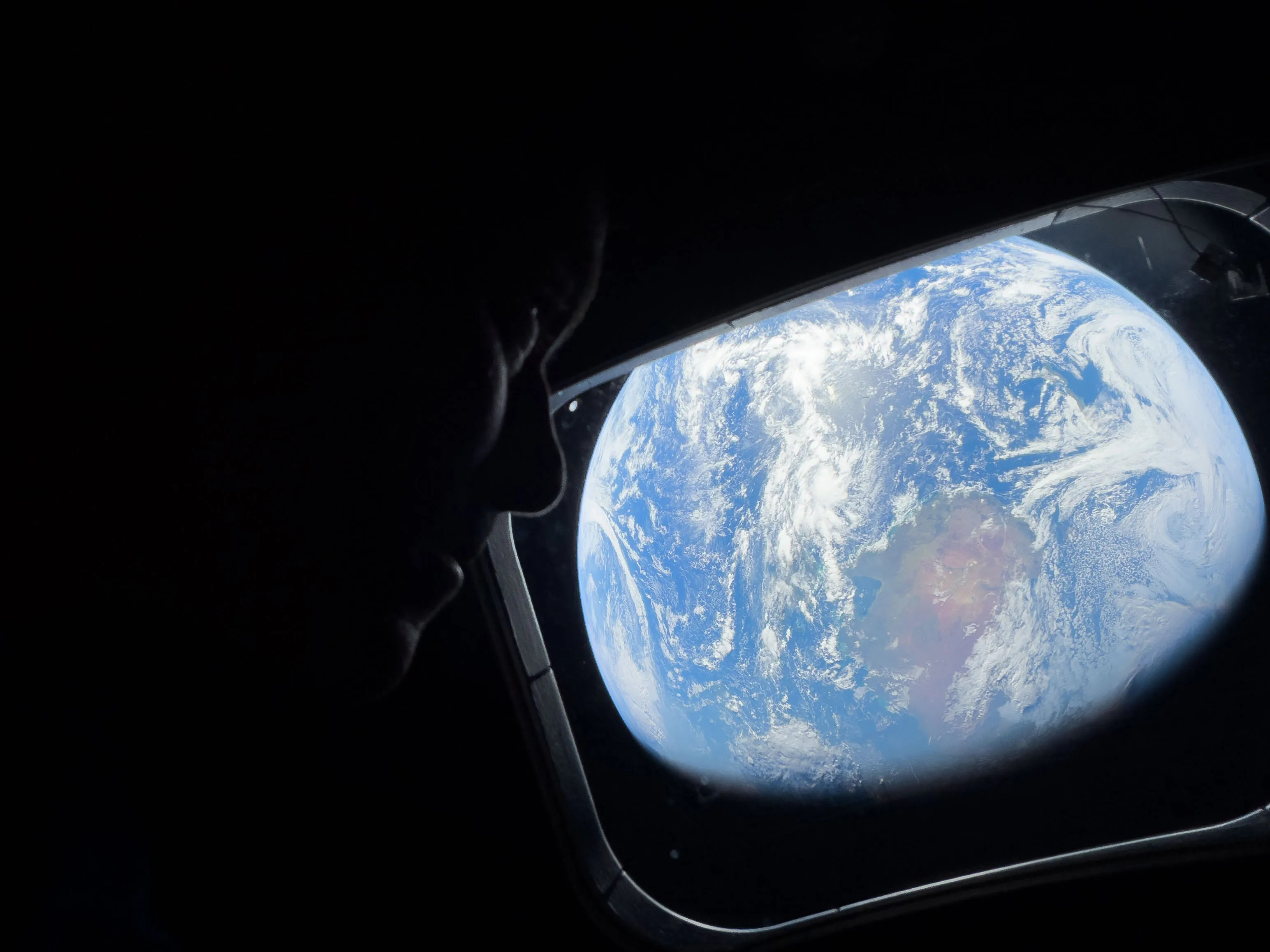
We do not have a Moon landing to point to right now. NASA’s Artemis program, fitfully funded and politically buffeted, has not yet returned Americans to the lunar surface, though it may yet do so if it can survive conservative budget cuts to fund wars of choice and corporate tax shelters. But wonder does not require a rocket. It necessitates only the willingness to notice what is still possible.
For now, we must believe it is still doable to change our government at the ballot box, and to organize, litigate, publish, march, run for office, and refuse to violate the tenets of our founding documents. It is still possible, barely, contingently, with effort, for us to hold the line. My contemporaries who came of age in 1968 did not know that the worst year of their lives would be followed, twelve months later, by one of the most transcendent moments in human history. They could not have known. They only knew to keep going. I think that’s what Americans have always done, and still do.
I believe that’s what the record of 1968 and 1969, bracketed between assassinations and Moon dust, actually teaches. Not that history and the moral universe bends automatically toward justice, King himself knew better than that, but that the bending requires hands. Human hands, tired and uncertain, reaching forward in the dark toward something they cannot yet see. We have been here before. We have also been somewhere better. And the distance between here and there is not fixed.
It is measured by how far we are willing to go.
Thank you for reminding us, all is not lost but hope comes with real effort. Make the noise, get out and vote if you love our country.
This may be the finest thing you've ever written. I want to share it with all my readers.