
The First Cowboy Song
Walls Across the West

"Often when I have camped here, it has made me want to become the ground, become the water, become the trees, mix with the whole thing. Not know myself from it. Never unmix again." - Owen Wister, author, The Virginian, 1902
A ribbon of chip seal comprises a narrow roadbed that traces the U.S. Mexico border from Study Butte to Presidio, Texas. People who ride motorcycles consider it one of the top ten routes in North America because it rises, turns, declines, and twists through an archaeological landscape almost beyond time. A pull-out atop what locals call “The Big Hill,” affords the traveler a view of the Rio Grande, draining toward the Gulf from somewhere on the other side of the desert’s horizon. The scene always suggests to me that what we humans think we know about existence is beyond our ability to understand, but certainly accessible emotionally. You will want to cry at the world’s beauty the first time you look across the water course to the west.
Designated by the state highway department as Ranch Road 170, its highest pass on the Big Hill is second only in elevation to the road on the top of McDonald Observatory at Mt. Locke in the Davis Mountains. I always stop at the pass and stare out at the river and the epochs of time recorded in layers of stone 1500 feet high on the Mexican frontier, the lava fields and great mesas cast upon the Texas roadside. The Rio Grande looks small and still from that altitude, and our species seems even more insignificant. The Big Hill on RR 170 will be the terminus of the federal government’s border wall before construction begins on the east side of Big Bend National Park in Boquillas Canyon and along stretches of the Rio Grande designated part of our national Wild and Scenic Rivers, which used to be protected from such degradations.
To even imagine looking upon a wall on the Rio Grande from the Big Hill is an insult to our history and humanity. No one crosses illegally into the U.S. in this country. That level of adventurousness generally ends in death from dehydration or starvation. Snakes, prickly pear, ocotillo, mountain lions, and bears await anyone who survives the lack of food and water.
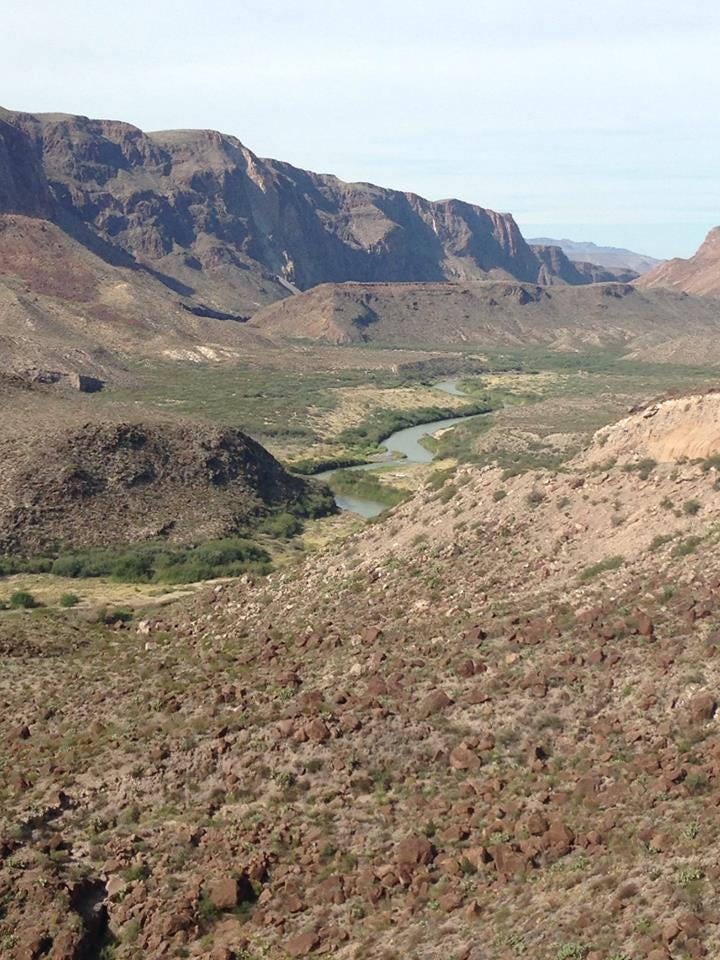
I remember a stop on my motorcycle on the Big Hill a few years ago in January. As I put the kickstand down on my bike, I glanced at the temperature gauge, which read 99 degrees. The overlook is probably my favorite spot in Texas. I was, as is always the case, entranced, when a large man with a goatee and a small dog on a leash appeared beside me. He, too, had just read his truck’s thermometer.
“Good lord,” he said. “We’re in the middle of winter. What the hell is it like out here in the summer?”
“Hotter,” I told him.
“Well, I damned sure wouldn’t be riding out here alone. I haven’t seen another vehicle in almost an hour.”
“It’s all part of why I come here,” I said.
He shook his head, got in his four-wheel drive Silverado, and drove off toward Terlingua. I rolled on westward to Presidio. The stranger’s amazement was understandable, though. Outsiders see the border region as inhospitable, and, in fact, there are few locales in the U.S. more dangerous to lone travelers. A long-time Big Bend resident I spoke with later almost overstated the matter and made me wonder about the individuals who had settled on the river’s banks 150 years earlier.
“I don’t think it’s possible to overstate the mortal risks of living out here, even now,” he said. “Back then you really were on your own. A snakebite was usually death. Running out of water while riding twenty miles to your neighbor’s? The same thing.”
There is a persuasive case to be made, though, that civilization in the U.S. part of the North American continent began on the Mexican border in a place called La Junta de los Rios, which makes the act of building a barrier there dramatically uncivilized. La Junta is where the Rio Grande and the Rio Conchos out of Mexico meet at what is now Presidio and Ojinaga, Mexico. The flood plains at that confluence have sustained agriculture for millennia. Archaeologists say the site is the oldest continually cultivated location in North America. The first humans arrived somewhere between 8,000 and 6,500 BC. They hunted javelina and rattlesnake and mountain lion. They ate fruit from the prickly-pear cactus and were eventually replaced by the Cochise culture around 1500 BC. The Cochise planted corn and built jacales, low-slung huts, from ocotillo sticks and mud. The Mogollon people followed. Then the Anasazi. Then the Spanish.
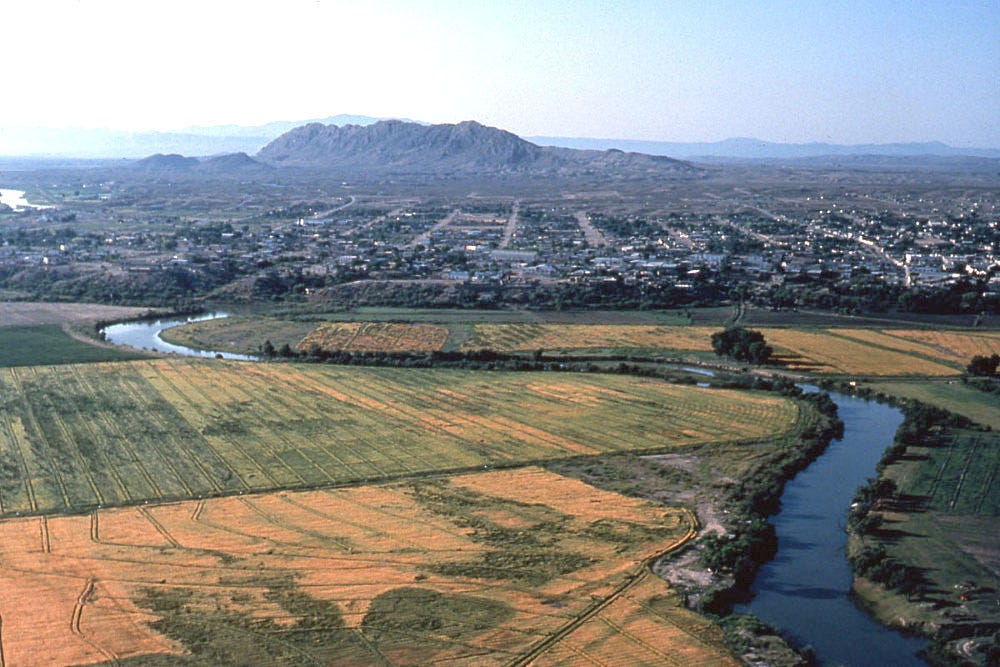
The first non-Indians to see La Junta were three Spaniards and one African. Alvar Nunez Cabeza de Vaca led them after surviving a shipwreck off the Texas coast and traveling overland for six years. In 1534 he recorded for the Spanish crown that the La Juntans had the best physiques of any people he had encountered and that they lived in houses that looked like houses. He wrote of the Jumano people that they “best understood us and intelligently answered our inquiries” and called them the cow nation because buffalo were slaughtered in great numbers in their territory.
That account was written nearly three hundred years before the appearance of two veterans of the Mexican American war of 1848. The land had not changed. The danger had not diminished. The only difference was the ambition of the men who came to La Junta. Ben Leaton and Milton Faver changed the American West and turned the border into a place of commerce, and crime.
They knew they were choosing a land that could kill them. Desolation and poisonous reptiles were not the greatest danger. The mountains and deserts were roamed by the fiercest Indian tribes north of the Rio Grande. The Comanche Chief Baja Sol was said to consider the presence of Anglos and Mexicans a crime punishable by death. He killed so wantonly that Chihuahua narratives of the period say it took courage just to whisper his name. Mescalero Apache were equally vicious. Both tribes raided Mexican cattlemen without mercy. They came down from the mountains and killed the herders and left with live animals and butchered beef.
Various Mexican authorities attempted to end the raids by offering bounties on Comanche and Apache scalps. Two men who turned this into a profitable enterprise were a crazed Irishman named James Kirker and former Texian independence fighter John Joel Glanton. The mercenaries quickly realized there was no effective way for the Mexican government to determine the origin of a scalp. They began killing peaceful sedentary Indians. Then they murdered most anyone they encountered. The Glanton Gang almost certainly served as the literary device Cormac McCarthy used to tell what may be the first honest story of the Old West in his novel “Blood Meridian.” I had packed the book in the panniers of my motorcycle and was rereading it for the fourth or fifth time on that trip.
Spanish missionaries had long attempted to convert the Jumano, Kiowa, Apache, and Comanche to Catholicism. They consistently failed. There was little incentive for the tribes to stop the depredations against settlers. The Indians ranged widely through the surrounding mountains and canyons after mastering the horse and they killed and robbed with impunity and rode away without fear of pursuit.
Before Manifest Destiny turned its attention north toward the High Plains, the Rockies, and the Pacific Coast, a version of the American West was already being assembled in this microcosm along the Rio Grande. The river crossing served as a funnel that forced together dreamers and outlaws and bounty hunters and adventurous settlers and people carrying secrets they hoped to forget. The river united them; it did not divide. Out of their midst legends emerged that were less compelling than the realities that have never been widely told.
Part of those origin stories were written by Ben Leaton. An historic fort bearing his name sits on Ranch Road 170, hard by the Rio Grande, a few miles east of Presidio and is now on the National Register of Historic Places. The yellow adobe walls are nearly three feet thick and stand twenty feet high. Leaton built it because he understood that when Comanche and Apache attacked out here help was somewhere beyond a horizon no one could see.
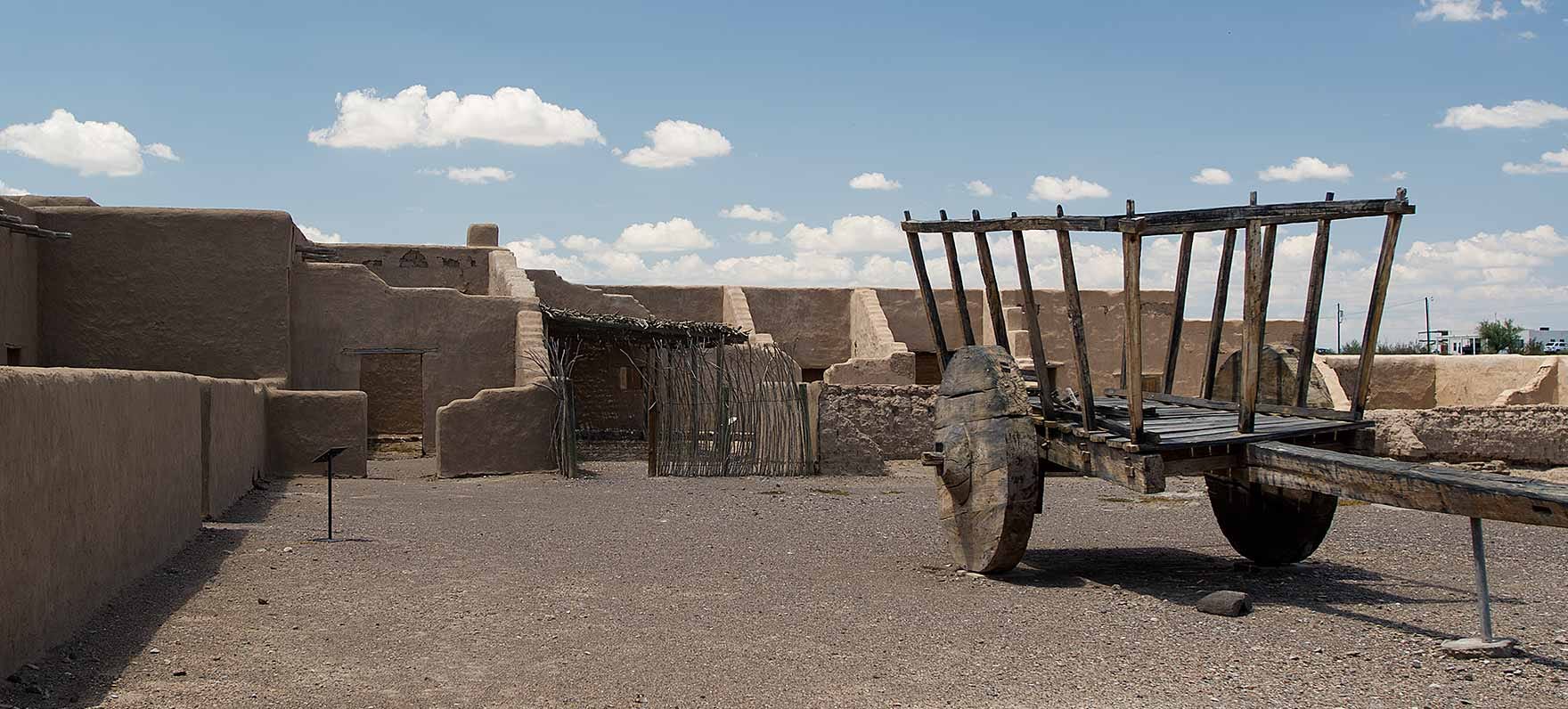
The only certainty about the fort’s origin is that Juan Bustillos built a small adobe on the site and in 1848 sold it to Leaton and his wife Juana Pedraza, whom he had met in Chihuahua City. Immediately, Leaton ordered peons and a few slaves to expand the structure into a forty-room el fortin. He intended to establish a place of commerce and sanctuary. First renderings of the history described a 15th-century Spanish mission on the site. Catholic church archives in Mexico City contain no record of any such outpost.
A Texas Parks and Wildlife manager gave me a tour. “You’ll notice how each room flows into the other,” the guide explained. “Leaton did not want any of his family to be trapped if Apache or Comanche got inside the walls. He designed the floor plan for escape.”
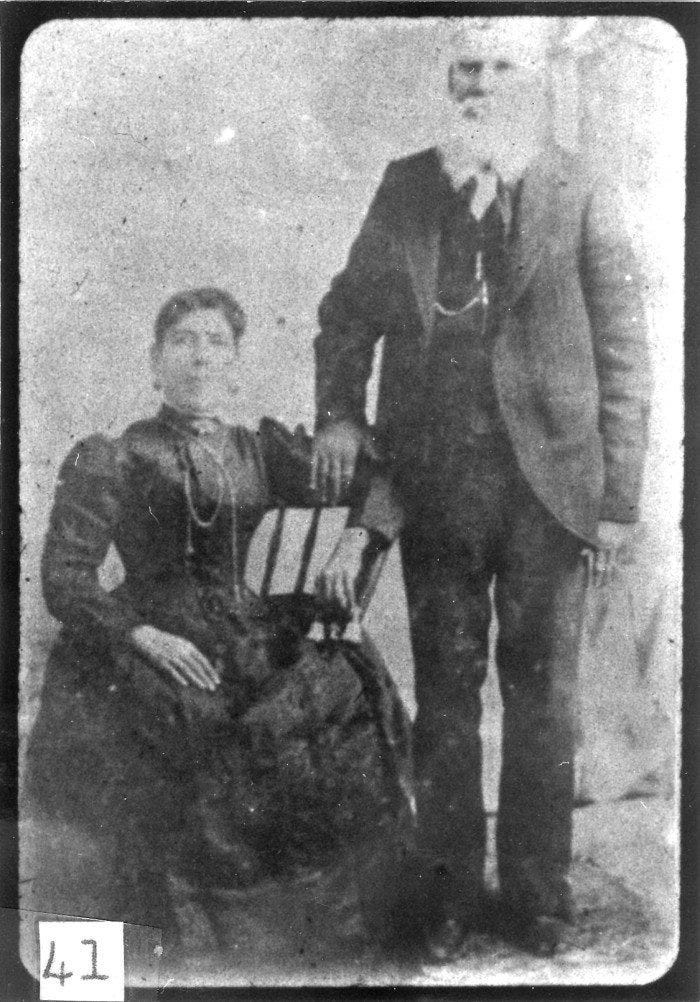
Leaton had reasons beyond Indian raids to be conscious of escape routes. His only known photograph shows a man about six feet tall with a long white beard. He was a scalp hunter. He traded guns to Indians who brought him stolen cattle for resale. He forged deeds to acquire property. He robbed travelers. The Mexican government paid him fifty dollars for each scalp he delivered. There are certain to have been Comanche and Apache who conducted business with Leaton a few days before he killed them and sliced the skin from their skulls.
But Leaton was not merely a criminal. He had experienced the high deserts during the Mexican American War, and he understood what was coming. The Treaty of Guadalupe Hidalgo in 1848 had opened commerce between the two countries. Freight wagons were expected to eventually move between San Antonio and Chihuahua. Leaton’s fortress was ideally positioned as a sanctuary and retail operation along the Rio Grande. He had arrived hundreds of miles and decades ahead of the westward expansion he knew was coming and he intended to profit from its arrival.
His neighbors did not share his confidence. When I topped that mountain pass and looked down at what Leaton had called his opportunity, the view did not suggest the remotest prospect of prosperity. There was no vegetation beyond ocotillo and prickly-pear cactus and scattered cottonwoods down by the river. Summer temperatures consistently reached 110 degrees. The air lacked even a trace of moisture for long months. The only sign that humans had ever traversed the region was the caliche roadbed I was riding along the Mexican frontier.
The Comanche and Apache pressed their claim to this land with considerable violence. Both tribes considered it their territory. Leaton’s horses and cattle and mules were constantly being stolen from outside the walls where they grazed. After a series of thefts and raids Leaton decided to try a peaceful approach to end conflict with the Indians. Mrs. O. L. Shipman, who lived nearby in Presidio del Norte, told the story years later to a newspaper.
“He invited the chiefs to dinner inside the fort,” she said. “These were the Comanche everyone knew were doing the stealing and killing down there. I suppose Ben thought he might buy them off by offering a cow or two every now and again.”
A feast was spread along a great table in the main dining hall. Whiskey and wine were poured freely. Huge beefsteaks were seared and laid before the chiefs and many of their braves. Leaton later told friends that he believed the evening had been a great success and that an understanding had been reached and there was even a distant possibility of friendship.
“Unfortunately,” Mrs. Shipman said, “the next morning his campesinos came in to tell him that when the Comanche left the night after the meal, they took with them many of Ben’s mules, horses, and cattle. Maybe the Indians had no idea that what they did was wrong or that it was at least a rude way to treat your host. There’s just no way to ever know.”
Lacking any cultural context for Leaton’s interpretation of their behavior, the Comanche had no cause to be suspicious a few weeks later when they were invited back for another dinner. The rancher had been trading guns for horses and cattle with them for months and they were accustomed to frequent interactions. Food and drink were again plentiful. The natives were quickly inebriated on Leaton’s peach brandy.
They would not have noticed the new wall built along the edge of the courtyard. The previous gathering had been held indoors but this was a warm evening, and the table had been spread in the open air.
“There were cannons behind that wall,” Mrs. Shipman said. “The military had sometimes used the fort as a garrison and for storage, so Ben had a couple of small cannons available. When the Indians were sufficiently drunk he and his family and workers left the courtyard and he gave the orders to open fire.”
The explosions burst through the facade and massacred the Comanche lingering over the table. The few still writhing after the cannon shot were gunned dead by riflemen stationed along the parapets. The number killed was not recorded. Leaton’s problems with the regional tribes temporarily abated.
The duplicitous dealings of Ben Leaton were not unique in La Junta. Murders and deception were nearly daily commerce. The baronial fort was his statement of intent. He was announcing to Mexicans and Indians alike that he intended to control cattle and commerce in the valley where the two rivers joined. He could not have anticipated that another American had arrived with even grander ambitions.
Ben Leaton was not destined to become the great cattleman of La Junta. That role belonged to a diminutive stranger who never talked about his past and arrived in the borderlands under circumstances that were curious at best and criminal at worst.
Milton Faver is believed to have run away from home in West Virginia as a young man and made his way to St. Joseph, Missouri, intending to join a wagon train bound for Santa Fe. Instead, he is said to have gotten into a gunfight and killed a man in an argument over a woman. Rather than await trial, he jumped his horse and rode alone into Indian territories until he signed up to fight the war in Mexico. When the war ended, he mustered out near Chihuahua City and drifted east toward the Rio Grande.
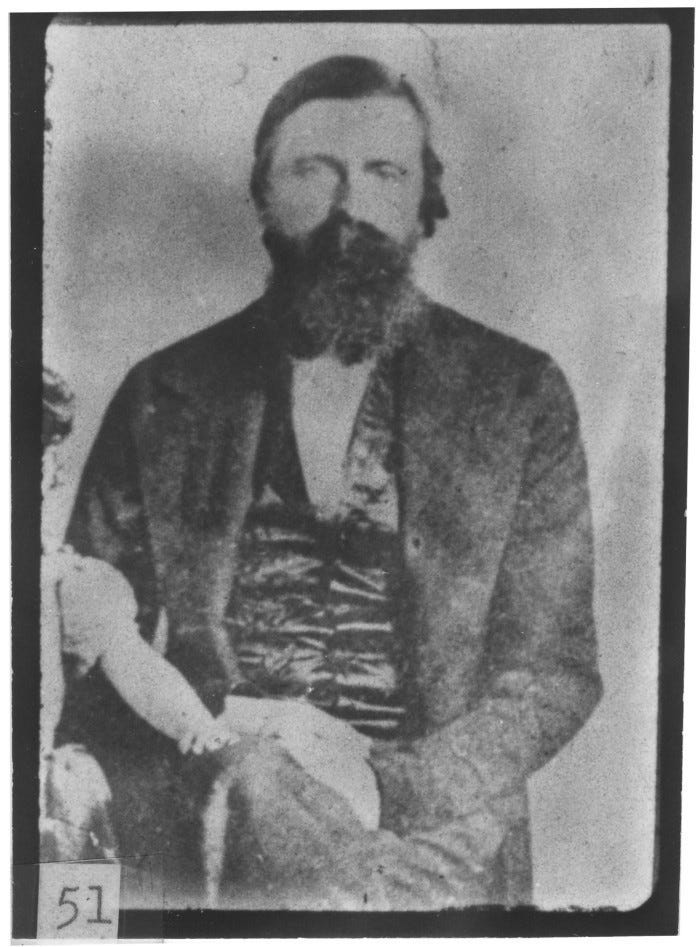
I got snatches of the family story from one of Faver’s descendants after tracing them to California.
“We know what happened,” Margaret Bustillos said. “There’s no secret about it. He told the story to his wife Fracesca, and his son Juan and Juan shared it with all seven of his children. Juan’s children are our parents and so that wasn’t that long ago. Anyway, we saw nothing wrong with what he did. That’s how it was back then.”
What Faver did next was improbable. The man who arrived in Chihuahua City pushing a handcart to sell produce through the streets somehow transformed himself into the most successful cattle rancher in the borderlands. He launched a mercantile supply business in Ojinaga and Presidio and used the proceeds to buy land on the U.S. side of the river. He gathered up cattle. He built the first of his three forts at Cibolo Creek.
Faver’s story was connected to the historic trade routes that threaded through the region. The Camino Real ran north from Chihuahua City to present-day Santa Fe. The Santa Fe Trail of U.S. westward expansion intersected with his commerce and may well have saved his life more than once.
I have always been more drawn to Faver’s story than Leaton’s. There was a small number of historical records regarding the cattleman in the archives at Sul Ross State University in Alpine. He lived and thrived in isolated country at a time when there were not even tax records to confirm a man’s existence. I had ridden my motorcycle out to Alpine to look for enough material to consider a book about Faver. There was not sufficient documentation to fill a morning. There were indications of surviving descendants, and I intended to pursue them. What I found in California only confirmed what I suspected. This was a man who had deliberately erased his tracks.
But the descendants remembered the cattle drives.
It was almost certainly Faver who created a kind of template for the cowboy when he decided to push cattle on long drives north to markets in Santa Fe. He delivered beef on the hoof to Fort Davis, the isolated and westernmost U.S. military post of his era. He had driven cattle overland as far as New Orleans. His long-standing agreements to supply Fort Davis with beef and other goods likely sustained his remote operation through years when other men would have quit.
He was said to have had as many as 100,000 longhorns on his vast holdings, which also included orchards and sheep and goats and farm produce. His influence on the growth of the West was thought to have reached as far as mid-twentieth century Hollywood. The TV series Rawhide featured a trail boss named Gil Favor (sic), and cowboys singing about following Mr. Favor through hail, wind, and weather.
When his son was mustered out of the Confederate Army in San Antonio after the Civil War, Faver took a train from a nearby town to escort the young man home. He was so disturbed by the train’s speed and movement that he bought two horses upon arrival and rode back to Presidio with his son across hundreds of miles of open desert through the Trans Pecos and Chihuahua Desert. He never rode a train again and did not live long enough to understand that the railroad made his cattle drives obsolete. In fact, the railroad that made every drover’s cattle drives fanciful.
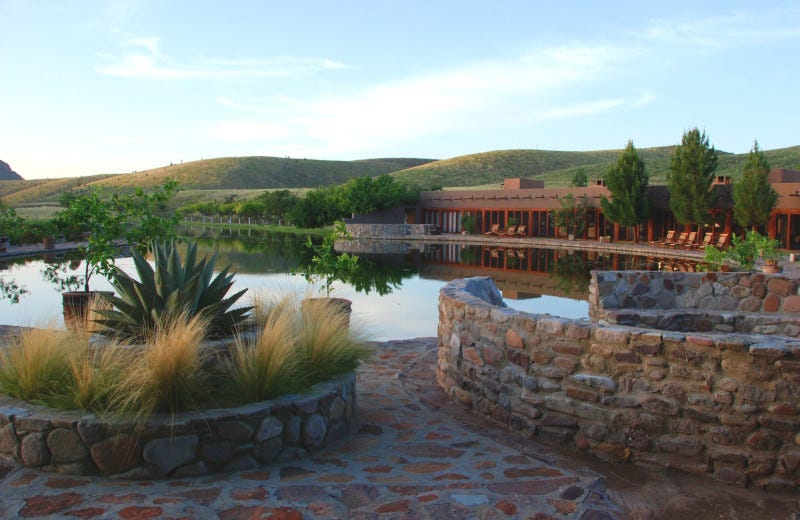
When Faver died in 1889 he was buried in an adobe vault at Cibolo Creek Ranch. The ranch fell into disrepair over the following century until Houston businessman John Poindexter purchased and refurbished it. Cibolo Creek is now a luxury resort where rock stars and movie stars and Supreme Court justices seek privacy in the grand isolation that Faver built with a handcart and a herd of longhorns. Ghosts of history seem to ride an eternal range out there.
Every American cowboy is a cultural descendant of the Vaquero. The Vaquero was a cattle herder from the Iberian Peninsula brought to Mesoamerica by Spanish priests establishing missions in Mexico. Vaqueros managed herds and rounded up strays and fixed fences and handled the birthing of calves. They were hired hands. They were tired and hot and dirty on a rich man’s hacendado. There was nothing romantic about their days.
That changed with the Mestaneros. These were vaqueros who roamed the plains and broke wild Mustang horses and drove them to markets in Northern Mexico and California and Texas. The Mestaneros were the first cattle drivers in the American tradition. But the idea of pushing cattle from places with no buyers to places with customers did not fully emerge until the post-Civil War era in Texas.
At the end of that war young men returned to Texas and found estimates circulating that there were possibly more than two million wild Longhorn cattle roaming along the Rio Grande. Charles Goodnight and Oliver Loving and Jesse Chisholm are usually credited with the idea of rounding up those cattle and pushing them north to railheads for delivery to eastern markets. The Goodnight-Loving Trail rose through West Texas and New Mexico to Denver and Wyoming. The Chisholm Trail crossed Texas and Oklahoma to Kansas’s railheads.
West of those historic trails, the cowboy rancher appears to have initially emerged in a place considerably more remote and more dangerous than anything the Chisholm Trail had to offer. The men along the Rio Grande were ex-military or fugitives or mysterious individuals who spoke multiple languages and expressed neither nationality nor loyalty to any laws other than those they wrote and enforced themselves.
The first cowboy was the man who initiated the concept of a cattle drive. He pushed great herds of animals from remote locations to markets where they could be sold. He did it without law to protect him and without roads to guide him and without the certainty that he would survive the journey. He operated according to principles he invented as he went along. That is not the story Hollywood told. Hollywood needed a white hat and a clear villain. The men along the Rio Grande wore no white hats and were frequently their own villains.
The national psychology has largely cured itself of guilt associated with the mass killings of Indian tribes that made the cattle drives and Western expansion possible. The iconic cowboy endures as a good guy who only shot people who needed shooting. The story was never that clean, though. The cowboy was mostly a man who did whatever was necessary to survive and maybe make a little money. His principles often weakened when circumstances required it.
Ben Leaton massacred Comanche guests at his dinner table. Milton Faver killed a man over a woman and fled across Indian territory to escape prosecution. Both mustered out of a war against Mexico and used the territory that war had transferred to the United States as raw material for personal enrichment, which might have also been considered, in different times, as economic development. The cowboy mythology absorbed men like these and turned them into something the country needed. That transformation says more about the country than it does about the men.
I always remember rolling off that mountain pass at the Big Hill and gaining speed on the descent toward Presidio. The lava fields spread out on either side and the Rio Grande cut through escarpments and into a hazy western distance. Canebrakes and reeds stood up improbably from the desert scrub just past Alamito Creek. I thought about the Comanche and Apache and Jumano who had moved through this landscape on foot and horse. I thought about Cabeza de Vaca walking through here for six years after a shipwreck. I thought about Faver pushing a handcart, and Leaton building his fort.
Today, instead, I am thinking about a wall.
Wonderful story telling, buddy. Ironically I just started rewatching the Ken Burns series on the West last night. This is a terrific piece.
Jim, Great piece. Your discription of the moral abiguity of these guys helps me better understand this crazy state we inhabit. Thanks for sharing your gift and your knowledge.